Showing posts with label wild. Show all posts

Friday, May 8, 2020

Gaur - Indian Bison

Bison (Bos Gaurus) or Gaur

Well, it is not a bison, the bovine belongs to the OX race but the familiarity of this huge bovine arrives due to the misnomer. Ox is supposed to be easily trained and domesticated but this animal does not seem to follow the scientific facts. He is nowhere domesticated at least in India. The mammals are found in many Asian countries but the status is vulnerable due to poaching and human encroachment.

In Hindi, it is known as gaur a tribal inflection that literately points to gau or cow in English. Hence this animal is called a gaur almost all of the country. Well at least in literature it is known as that. 

The fully grown male may weigh around one ton and during nonbreeding periods they stay together in a small group of two or three. Both sexes have horns and the dorsal ridge is much more prominent on the bulls which are also darker in coloration. The white stockings and the pale muzzle are another hallmark distinction apart from the bulk and height that among males could be six feet. In appearance, they are nowhere closer to the wild water buffalo (bubalis bubalis) hence identity is not confused. The latter is found in herds in marshy grasslands in few reserves and on the verge of extinction. 


The female and young form a larger herd of twenty to forty. The females may weigh up to seven hundred kilograms. They give birth to a single calf rarely two which can be seen alongside. The gestation period is of nine months and breeding peaks during the winters although they mate all around.

The bovine is very protective of the young ones and can immediately form a protective ring whence they sense danger. Their main predator is the tiger but young ones can fall prey to a leopard, crocodile, wild dog, or python. They have been known to kill big cats in an encounter but the latter is usually the winner. Sparring males can be dangerous and they have been known to men in a fit of anger.  

They are vulnerable everywhere but in recent times faring better in India due to conservation inputs. At Kanha National Park Indian bison population is over 2000 and this is a remarkable recovery after the epidemic in 1976 probably a case of foot and mouth disease or rinderpest. The disease is introduced by the intruding livestock which needs to be inoculated around the reserves.       

By nature, the coarse grazer is timid and shies away from humans but there have been instances of charge whence agitated. They usually graze coarse vegetation but are also found in the grasslands in the dry seasons.

============================================================
Uday Freelances as Naturalist in Central India. He is an avid birder and tiger enthusiast. He blogs on tigers, wildlife, and birds. He also writes about the environment and conservation.

Uday provides SEO Services and Website Content in English. He teaches Digital Marketing in Jabalpur during Summer Holidays.
--------
Contact: pateluday90@hotmail.com
09755089323 
====================================================

In Kanha, the conservation practices have been very successful and they can now be seen in the buffer zone as well in pockets of forests that are still present. They are not seen near cultivation and probably do not enter. The habitat preference is the highlands in the reserves but descends in summer due to duress. On many occasions, I  have seen them peeling off barks as supplements during the dry season. Though they are not partial to water or marshy lands they can be seen often in summer to quench thirst in herds.  

Friday, November 29, 2019

Wildlife Photography : Kanha National Park

Situated in Maikal Hills the last leg of Satpura where the Vindhya Range meet...the amazing tiger landscape of Central India is home to equally amazing biodiversity. In this blog post, I have added images of enchanting wildlife of Kanha which expresses the diveristy, testifying the miracle that our beloved Earth is about.  

In this bewildering tiger landscape, mammals, birds, reptiles and insects abound. During the tiger safari alert senses deliver optimum opportunities to film and photograph wildlife in its natural confines. A good camera with a good lens works wonder along with a keen sense of capturing the right composition, large long focal length lenses are not required and even an amateur can deliver wonderful results whence working with dilligence.

Puff Ball Fungi

Common Kingfisher

Indian Scops Owl

Wild Boar

Hard Ground Swamp Deer

 Red Naped Ibis 

Crested Hawk Eagle
Black Naped Hare

Tiger

Sambar Deer
Monitor Lizard

Jackal

Giant Wood Spider

Python

Lotus

Mongoose

While these are average photographs captured using an average camera which solves the purpose of the naturalists and amateur wildlife enthusiasts. Photography is an important tool for studying wildlife and for preserving records. 

Kanha Tiger Reserve offers immense opportunity to see, photograph and film wildlife diversity in its natural form. Mad chase for tiger is not that rewarding. Whence on tiger safari study all elements holistically and with profound keeness to enliven your holiday!!
=====================================================================

I work as naturalist/birding guide at Kanha National Park in Central India.
I also provide Digital Marketing Services and website Contents.
Contact: 975508932
pateluday90@hotmail.com 

Sunday, May 27, 2018

Munna Returns! A Tiger in The Pool!

A Survival Saga in The Wild

After missing for some time we came across this magnificent beast who is a legend of Kanha National Park in India. We were actually searching for M1 the new male who is often seen in the area.

Is he a living fossil? Well No?

But his survival is miraculous and mysterious. Normally tiger's life span in the wild is 14 to 16 years. Perhaps he is the oldest living tiger in the wild. No big cat in Kanha has been able to command such a large area as a dominant male. He has virtually ruled all over the park both in the core and buffer.      

A look down below the steep precipice resulted in a tiger being sighted in a pool. We did not know who it was but the subsequent roaring definitely suggested Munna. We could see him well from all angles, a tiny diminutive figure hardly suggested a big cat but it was. I could then see it moving and as per our judgment, we too moved a small distance forward and came to stop in front of the dry stream.

In summers in Kanha, most of the sources of water come to an end but this rivulet contained a pool some distance away from where we were stationed. And it was at this pool that we saw the tiger. Expecting it to emerge at the dry portion of the stream we waited patiently. Since it was time for the Sun to set the likelihood was great.      

The beast did emerge roaring as he used to do in his heydays. He came close on to the dry stream and began scent marking before he sat down near the tree to eat sand. Tigers do this to make up for lack of minerals. 

Munna had a habit of repeating his moves and so we reached the same spot the other evening. We were not disappointed Munna tiger emerged from a pathway and came to a halt near our jeep. He looked much feebler than before and could walk a few steps and rest. He looked terribly sad and forlorn as old age overtook him and he was no longer capable of warding off dominant males.

He was not active as usual and appeared hungry unable to make a kill perhaps. He moved some distance away roaring profusely and came to rest again. The male tiger continued to roar as he sat resting under the shade of a tree. 

We watched the magnificent creature emphatically perhaps saddened by his plight and aware that his time has come. Will we see him next season? Well, you never know ageing Munna is capable of springing surprises thanks to his indomitable survival instinct.

Presumed dead being over eighteen years of age and feeble he surprised everyone by appearing near the same spot in June 2019. Long Live Munna I Hope To See You in October Again.  

Thursday, March 23, 2017

Wild Encounters - John Leonn

John Leonn Canada & Friends
Courtyard House Kanha

Not dithered by age John Leonn retired veterinarian from Canada is an enthusiastic wildlife photographer and skier. He spends time at ski grounds doing all the hard work he loves. He spent time in India at various tiger reserves photographing wildlife in its natural habitats. 

Here are some of amazing wild animal pictures that he took assiduously while on visits to wilderness. I accompanied him as naturalist whence he visited Kanha Tiger Reserve in Central India. 

Posted below are some of his images which enthral the viewers. 
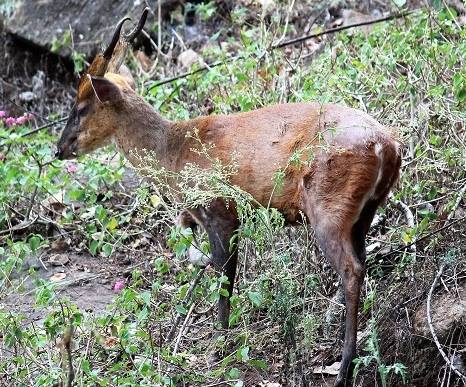
barking deer

male tiger

bison

spotted deer

Wild dog

Wild Dog Pack

Elephant mother and calf

bushchat

langur

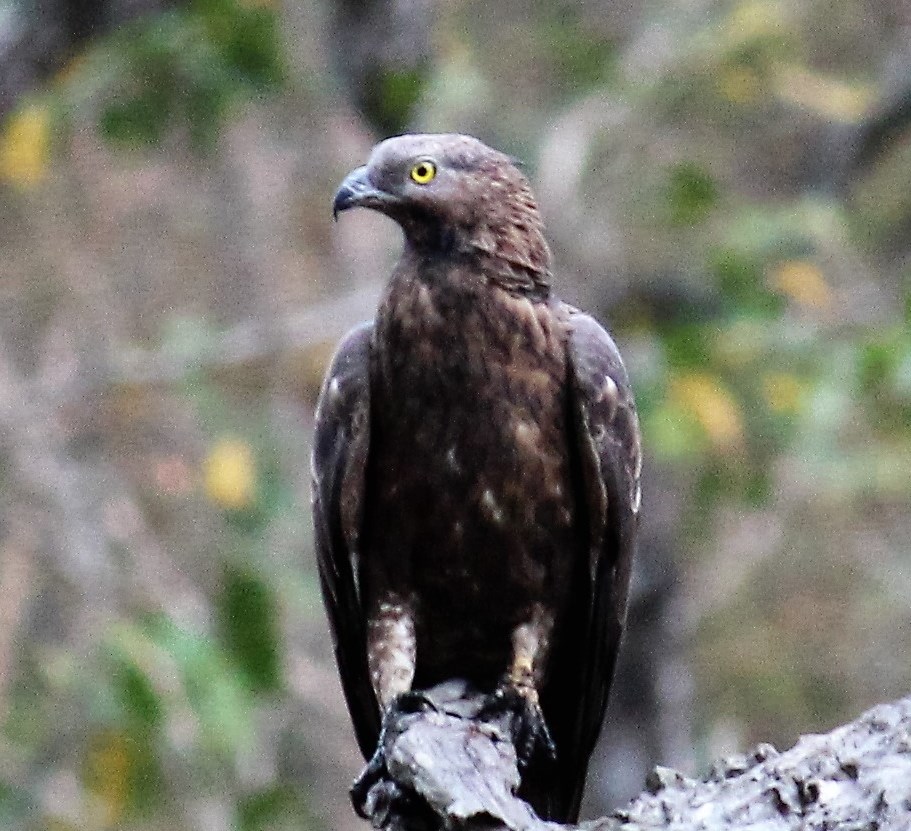
honey buzzard

India Pitta

Rhino

John

Elephant ride


king Vulture

Panther

LeopardonTree

Bengal Tiger

Marsh Crocodile

One Horned Rhinoceros

Plum Headed Parakeets


Sambar

Sloth Bear


Swamp Deer

Tiger at WaterHole


Pug Mark of Tiger


Wild Buffalo

Wild Boar


    ============================================================
Uday Freelances as Naturalist in Central India. He is an avid birder and tiger enthusiast. He blogs on tigers, wildlife and birds. He also writes on the environment and conservation.

Uday also provides SEO Services and Website Contents in English. He teaches Digital Marketing in Jabalpur in Summer Holidays.
--------
Contact: pateluday90@hotmail.com
09755089323 
====================================================